

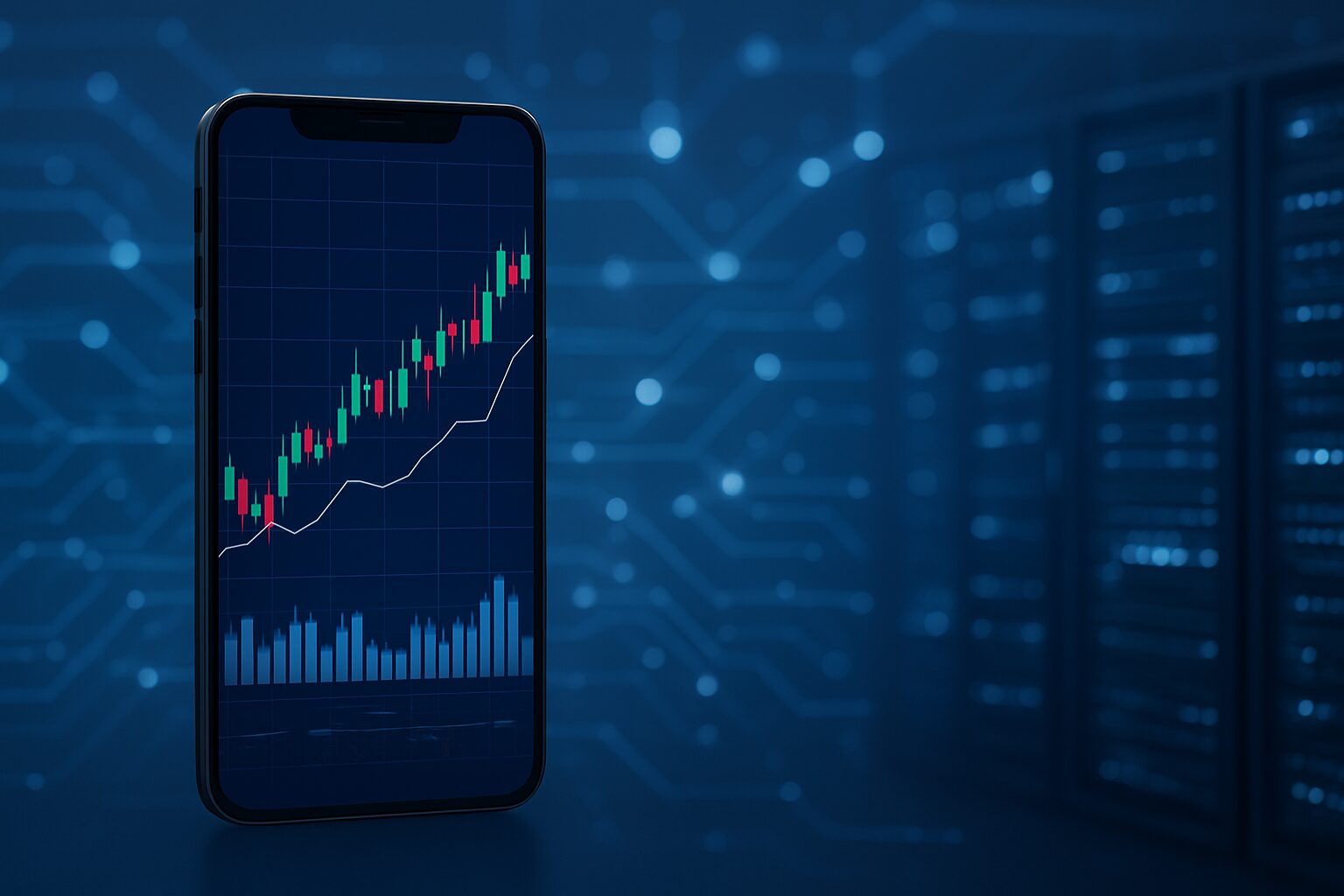
Traders approaching the Android forex app market for the first time often focus on surface-level features — the interface design, the number of currency pairs available, or brand recognition. But a thorough evaluation goes deeper. Understanding how a forex trading app android platform handles execution, analysis, connectivity, and support will reveal far more about its suitability for serious trading than aesthetics alone.
What Execution Quality Indicators Should Android Forex App Users Look For?
Execution quality is the measure of how accurately and quickly an app processes a trade instruction. On Android, this involves both the speed of the app itself and the reliability of the connection between the app and the brokerage’s trading servers.
Requotes — situations where the requested price is no longer available and the broker offers a different one — are a common point of friction. Traders evaluating a new app should test execution during both low-volatility and high-volatility sessions to understand how consistently the platform performs. Demo accounts are a practical way to gather this data before risking live capital.
How Do Economic Calendars and News Feeds Enhance the Android Trading Experience?
Currency markets respond strongly to scheduled economic releases and central bank announcements. An Android forex app that integrates an economic calendar gives traders visibility into upcoming events that could generate significant price movement. This allows for proactive position management rather than reactive responses.
In-app news feeds serve a similar purpose by surfacing relevant financial developments in real time. The most useful implementations allow traders to filter news by currency pair or region, ensuring that the information displayed is directly relevant to their open positions and watchlists.
Why Does Cross-Device Synchronization Matter for Serious Forex Traders?
Most active traders don’t rely exclusively on mobile. They shift between Android devices, desktop platforms, and sometimes web-based terminals depending on the situation. An app that synchronizes account data, open positions, and settings across all devices removes the need to manually reconcile information or re-enter preferences each time the platform is accessed.
This level of integration is particularly important when managing trades that were opened on one device and need to be monitored or closed on another. Seamless synchronization reflects a mature, well-engineered platform built for traders who operate across multiple environments.
What Risk Management Tools Should Be Standard in a Forex App on Android?
Risk management is the discipline that separates sustainable trading from speculative loss. On Android, this means having access to tools that enforce predefined risk parameters directly within the app. Margin level indicators, automatic margin call alerts, and the ability to set maximum loss limits per trade or per session are features that protect traders from the compounding effects of poor risk control.
Some platforms also offer position size calculators that help traders determine appropriate lot sizes based on account balance and risk tolerance. These tools are especially valuable for newer traders who are still developing the instinct for calibrated risk exposure.
How Should Traders Assess Customer Support Quality for Forex Apps?
Technical issues on a trading platform can arise at any time, including during active market hours. The quality of customer support available through the app — or connected to the broader brokerage — has a direct impact on how quickly those issues can be resolved.
Traders should evaluate the support channels offered: live chat, email, and phone support each have different response time characteristics. Testing support responsiveness before opening a live account provides a realistic picture of what to expect when a genuine problem occurs under time pressure.
Choosing With Confidence, Not Just Familiarity
The most common mistake traders make when selecting an Android forex app is defaulting to what is most familiar or most heavily advertised. A platform’s marketing presence has little bearing on its technical reliability, execution quality, or suitability for a particular trading style.
A structured evaluation process — one that tests execution, verifies security standards, assesses charting depth, and benchmarks support responsiveness — gives traders a factual basis for their choice. The Android ecosystem offers capable, professional-grade options for traders at every level. The goal is to identify the one that aligns with your specific approach, not simply the one with the broadest name recognition.
++